
12 Best AI Visibility Tools in 2026
The 12 best AI visibility tools in 2026 for checking whether ChatGPT, Gemini, Claude and Perplexity recommend your brand, with plan prices from each company’s site and steps to appear in more AI answers.

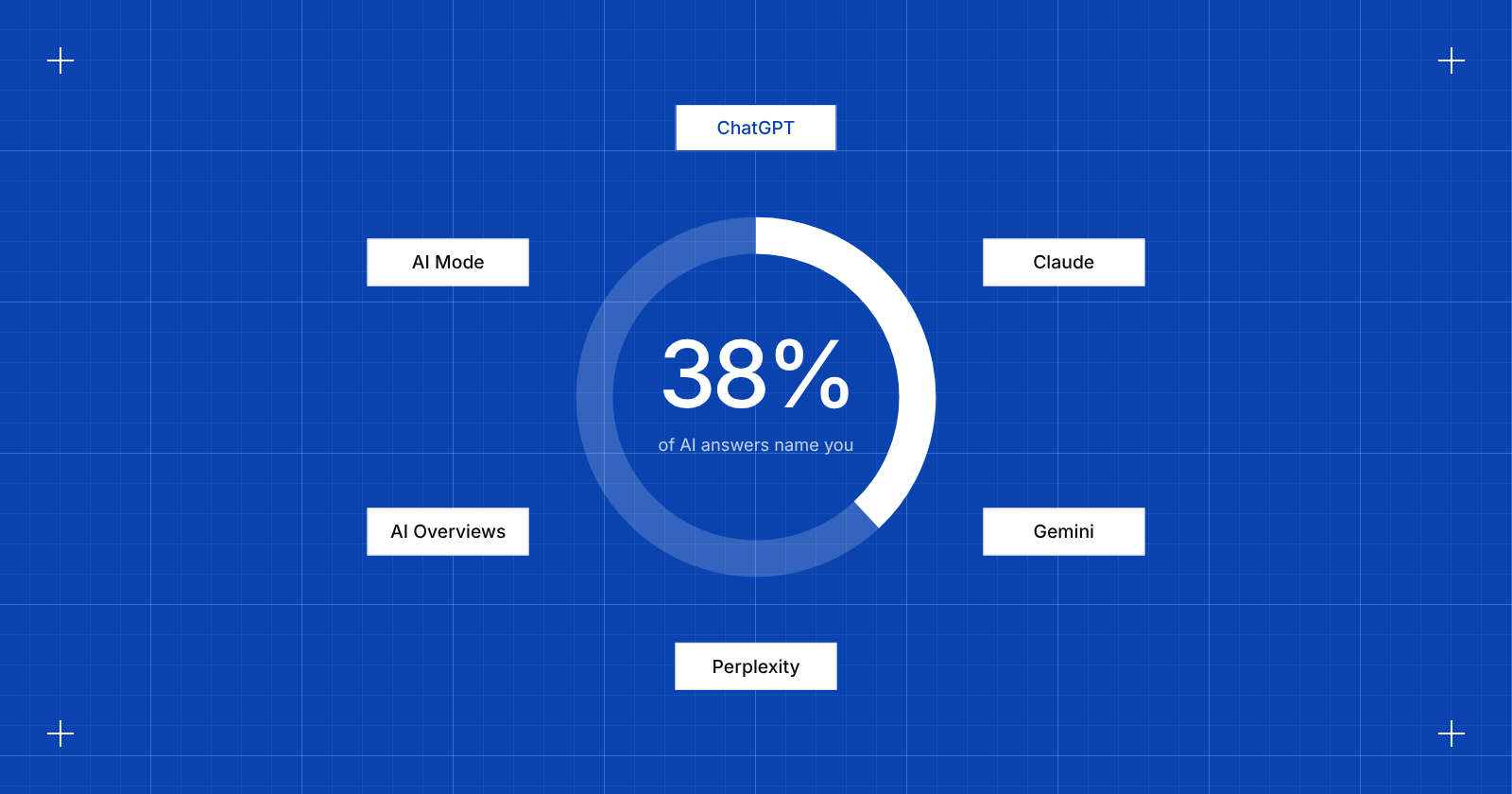
Many buyers now ask ChatGPT, Gemini and Perplexity for recommendations, and they often act on the short list those tools give them. For marketing teams, that raises a new question: does AI recommend our brand?
A few prompts typed into ChatGPT give a first look. Answers change from day to day and between models, so a tool that asks the same questions on a schedule gives a steadier picture. The 12 tools below do that, and some also help you act on what they find.
AI visibility tools: main points
- Plans range from free to custom enterprise deals. Otterly.ai starts at $29 a month, Arrowsterr at $39, Peec AI at $95 and SE Ranking at $129. Profound sells custom Enterprise plans after a free trial.
- Otterly.ai’s $29 plan tracks 15 prompts on 4 AIs. Arrowsterr’s $39 plan tracks 50 prompts on 6 AIs, and Peec AI’s $95 plan tracks 50 prompts on 3 models you pick.
- Gemini, Google AI Mode and Claude cost extra on some tools.
- Tools with content plans and writing help your team act on the data.
What is an AI visibility tool?
An AI visibility tool tracks how often AI assistants mention your brand when people ask questions about your category. You may also see them called AI rank trackers, LLM trackers or GEO tools, and they all do roughly the same job.
You give the tool a list of prompts, like “best CRM for real estate agents.” The tool asks those prompts in ChatGPT, Gemini, Claude, Perplexity and Google’s AI Overviews, then records:
- whether your brand was named,
- where it showed up in the list,
- how warmly the AI described it,
- which competitors were named instead,
- which websites the AI cited as sources.
It works like rank tracking for answers. Google rankings show where your page sits on a results page, and AI visibility shows whether your brand appears in the answer.
Why AI visibility is hard to measure
AI answers work differently from a page of search results in four ways.
AI answers change between runs
If you ask ChatGPT the same question twice, you might get 2 different lists. The models vary their answers a little each time and get updated often, so the pattern only shows up across many checks.
AI assistants don’t share query data
Google Search Console shows which queries showed your site and how often people clicked. AI assistants don’t share that data, so you have to work out which questions your buyers ask and test them yourself.
Small wording changes can change the answer
“Best CRM for agencies” and “which CRM should a small agency use” ask the same thing, and they can still get different answers with different brands. The most useful tools track groups of related prompts, called topics, and report on the whole group.
AI answers depend on the sources they cite
When AI assistants search the web before answering, they pull from a handful of pages: review sites, Reddit threads, listicles and brand websites. When those pages mention you, the answer is more likely to mention you too. A good tool shows you those sources so you know where to get mentioned.
How AI visibility tools work
Almost every tool follows the same 4 steps.
- It sends your prompts to each AI, through its API or through a browser that acts like a real user. Daily runs give the clearest view, since answers move often.
- It reads every answer and pulls out each brand named, in order. It matches spelling variations, so “HubSpot CRM” and “HubSpot” count as one brand.
- It scores the results. Most tools roll the answers into visibility (the share of answers that name you), position, sentiment and citations.
- It tracks the trend. Because answers move around, the trend over 7, 30 and 90 days tells you more than any single day.
To find prompts worth tracking, we use this method with every client. Export your queries from Google Search Console, paste them into a Google Sheet, and filter for questions with this regex:
\b(who|what|where|when|why|how|which|can|do|does|is|are|should|best|top|vs)\bLong questions that already bring you Google traffic are often the same questions people now ask AI. You’ll end up with prompts like “Which CRM do most realtors use?” or “Is HubSpot or Pipedrive better for a small sales team?”
What to look for in an AI visibility tool
Compare these points before you pick a tool.
- A free trial or free plan lets you test the tool on your own prompts.
- Prompt suggestions save you hours, since choosing what to track takes the most thought. Look for tools that research your brand and suggest prompts.
- Coverage should match the models your buyers use. Start with ChatGPT, add Google AI Overviews and AI Mode if you get Google traffic, and then add Perplexity, Gemini and Claude. Check whether any of these cost extra.
- A sources report shows which sites to work on next, while visibility numbers show where you stand.
- Some tools turn gaps into a content plan or a list of sites to get mentioned on, which gives your team clear next steps.
Best AI visibility tools compared
| Tool | Starts at | AIs tracked | Best for |
|---|---|---|---|
| Arrowsterr |
Free, then $39/mo | 6 AIs | Teams who want to track AI answers and fix the gaps in one place |
| $129/mo | 5 AIs | SEO teams who want AI tracking inside a full SEO suite | |
 Peec AI |
$95/mo | 3 models | Teams who want clean reporting, unlimited seats and Looker Studio |
| Custom (free trial) | 3 AIs on the trial, up to 9 on Enterprise | Enterprise brands that want prompt volume and AI crawler data | |
| $9.80/mo | 12 models | Teams on a budget who want Google and AI rank tracking together | |
| $29/mo | 4 AIs | Small teams starting out, plus page audits for AI search | |
| Free, then $295/mo | 5 AIs free, 11 on Starter | Funded brands that want credits across many AI models | |
| $49/mo | 7 AIs | Businesses with many locations or markets | |
| €99/mo | 6 AIs | SEO teams with big keyword lists who want AI data on the side | |
| $17/mo billed yearly | 17+ AIs | Teams who want many AI models on a small budget | |
| $199/mo per AI index | 6 AIs, plus Claude in custom prompts | Teams who want AI data for the whole market now | |
| Free | None | Teams measuring visits from AI assistants |
Arrowsterr$39/moPeec AI$95/moReviews of the 12 best AI visibility tools
1. Arrowsterr

When you add your website, Arrowsterr researches your brand, your buyers and your competitors, then suggests 5 topics with 5 prompts each. It checks ChatGPT, Gemini, Google AI Overviews and Google AI Mode every day, plus Claude and Perplexity every week. It fits teams who want to track AI answers and fix the gaps in one place.
Try Arrowsterr free to see which AI answers name your brand.
Key features
- Prompt tracking: You get visibility, sentiment, position and rank for every prompt, with each model’s full answer.
- Competitor view: It places every brand on a quadrant of Leaders, Challengers, Niche Kings and Rising Stars.
- Sources view: It shows which sites and pages AI cites, sorted into types like Reddit, review sites and editorial.
- Content Plan and writing: It builds a Content Plan from your gaps, writes briefs from Google’s top 10 and drafts articles in your brand voice.
- Publishing: It publishes straight to WordPress, Webflow, Shopify, HubSpot or Ghost.
- Reports and MCP: Agencies get white label client reports, and you can ask Claude or ChatGPT about your numbers through the Arrowsterr MCP server.
Pros
- The $39 entry plan tracks 50 prompts on 6 AIs.
- It researches your brand and suggests prompts, so you don’t start from a blank list.
- It covers the whole process, from tracking to a published page.
- The 7 day trial opens both toolsets and needs no credit card.
- The Free forever plan checks 10 prompts weekly on ChatGPT and Google AI Overviews at no cost.
Cons
- Claude and Perplexity are checked weekly, while the other four AIs are checked daily.
- Starter covers one toolset, and both toolsets need Pro.
Price and plans
You can try Arrowsterr free for 7 days with no credit card, or start on the Free forever plan. Paid plans are as follows.
- Free: $0 forever, with 10 prompts checked weekly on ChatGPT and Google AI Overviews.
- Starter: $39 per month ($33 billed yearly) for one toolset and 50 prompts.
- Pro: $179 per month ($152 billed yearly) for both toolsets and 150 prompts.
- Agency: $499 per month ($424 billed yearly) for 400 prompts with white label reports.
- Enterprise: from $1,500 per month for 1,000 prompts and SSO.
Try Arrowsterr free to see which AI answers name your brand.
 2. SE Ranking

SE Ranking is an SEO suite that also tracks AI answers on 5 AI engines, including ChatGPT, Gemini, Google AI Overviews and AI Mode. It suits SEO teams who want AI tracking inside the suite they already use for rankings.
Key features
- Daily AI tracking: Core and Growth each track 25 prompts every day.
- Brand share: You see the share of prompts that mention your brand or link to your site.
- Competitors and sources: It shows which competitors and sources show up for the same prompts.
- SEO suite: Core also includes 2,000 Google keywords tracked daily, site audits and competitor research.
- SE Visible: A standalone AI tracker covers AI Overviews, AI Mode, Gemini, ChatGPT, Copilot and more, with unlimited users.
Pros
- All 25 prompts on Core run every day.
- AI tracking sits next to your Google keywords and site audits.
- You can test it for 14 days with no credit card.
Cons
- The $129 price covers the full SEO suite.
- For more than 25 prompts, SE Visible is sold as its own product.
- Claude isn’t among the AIs it tracks.
Price and plans
You can try SE Ranking free for 14 days with no credit card. Paid plans are as follows.
- Core: $129 per month ($103.20 billed yearly) for 25 prompts tracked daily.
- Growth: $279 per month ($223.20 billed yearly) for 25 prompts, 30 projects and 3 seats.
- SE Visible: from $71 per month for 75 prompts.
3. Peec AI
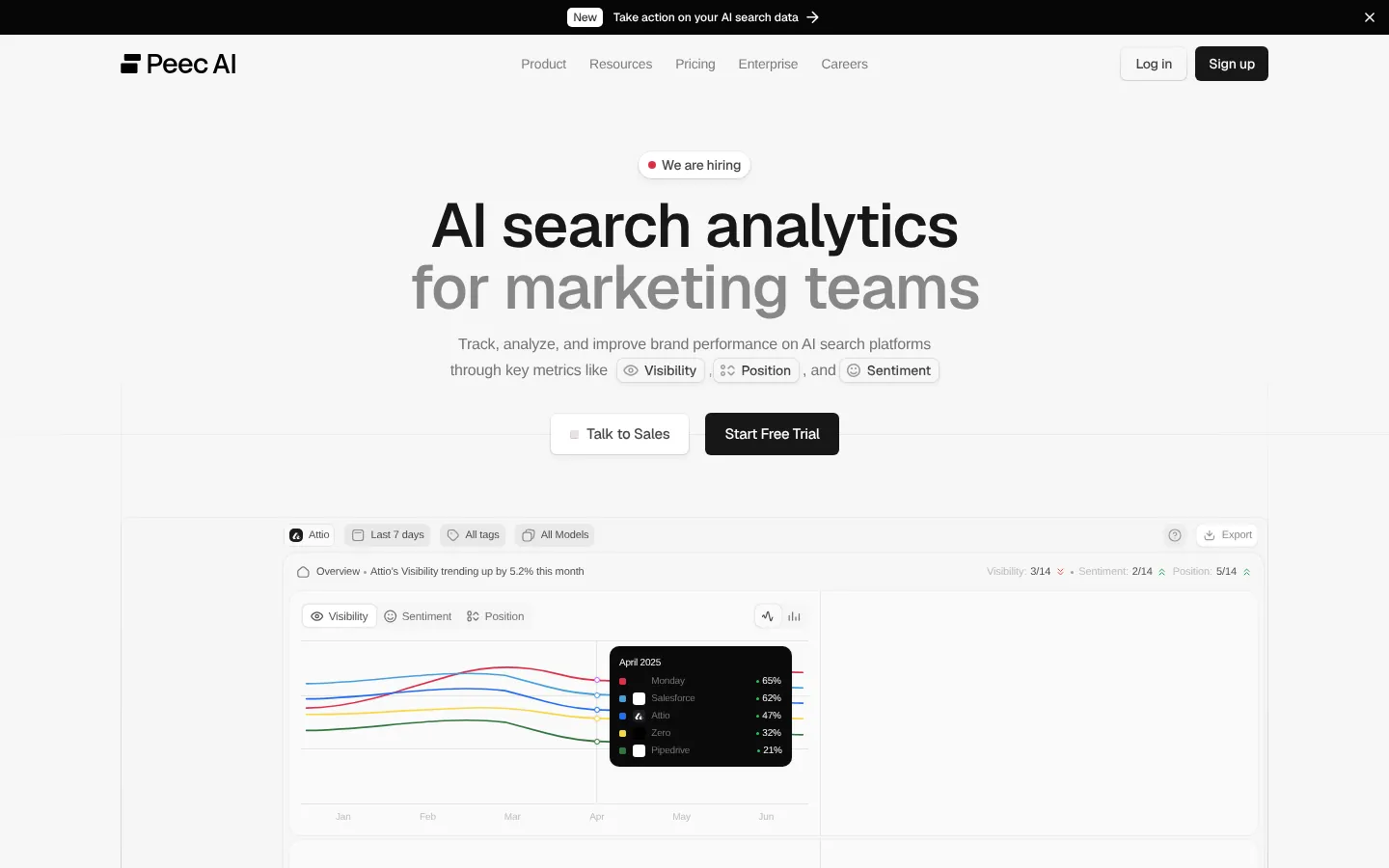
Peec AI is a focused AI visibility tracker whose reports compare your visibility, position and sentiment to competitors. Teams who want clean reporting, unlimited seats and Looker Studio are its best match.
Key features
- Competitor reports: You compare your visibility, position and sentiment to competitors.
- Source breakdown: You see which sources the AI draws on.
- Prompt suggestions: It suggests prompts during setup.
- Model choice: Each plan includes 3 models you pick from ChatGPT, Google AI Overviews, AI Mode, Gemini, Copilot and Naver AI. Perplexity costs extra.
- MCP and Looker Studio: It has an MCP server and a Looker Studio connector.
Pros
- Every plan includes unlimited seats.
- Its reports are clean and focused.
- A free trial lets you test it before you pay.
Cons
- Each plan covers only the 3 models you pick.
- A 4th model costs extra ($35 a month on Starter), and Claude and DeepSeek come only with Enterprise.
Price and plans
Peec AI has a free trial. Paid plans are as follows.
- Starter: $95 per month for 50 prompts on 3 models you pick.
- Pro: $245 per month for 150 prompts.
- Advanced: $495 per month for 350 prompts, more countries and Looker Studio.
- Enterprise: custom.
 4. Profound
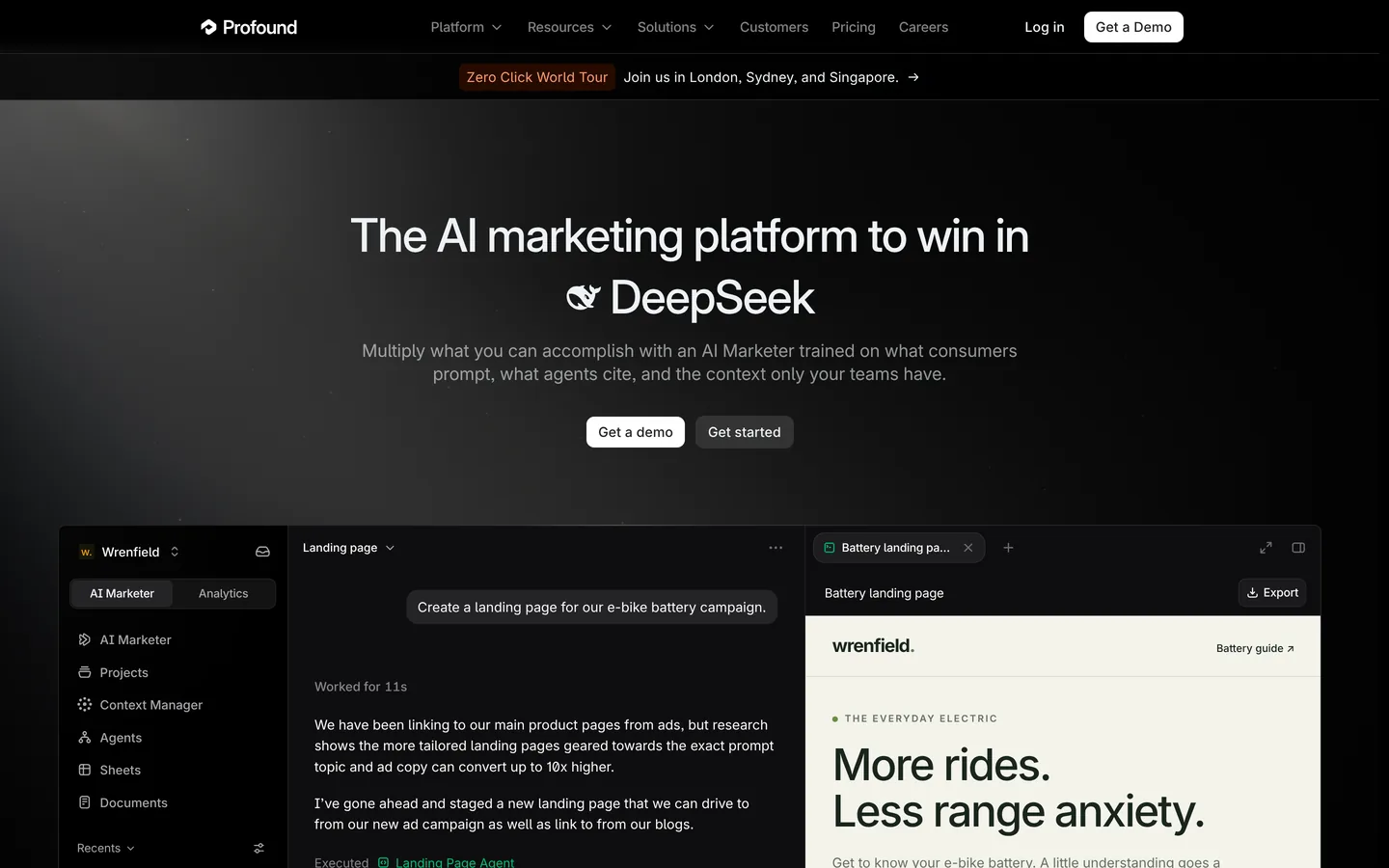
Profound adds prompt demand data and AI crawler data to AI visibility tracking. It is built for enterprise brands.
Key features
- Prompt tracking: The free trial runs 50 prompts a day on ChatGPT, Gemini and Google AI Overviews.
- Prompt Volumes: It estimates how often people ask AI about a topic.
- Agent Analytics: It shows which AI crawlers read your pages.
- AI content generation: Enterprise adds AI content generation.
- Enterprise coverage: Enterprise covers up to 9 AI engines, including Perplexity, AI Mode, Claude and Copilot.
Pros
- Prompt Volumes and Agent Analytics sit next to prompt tracking.
- It was one of the first tools in this space.
- The free trial runs 50 prompts for 7 days.
- The trial and Enterprise both include unlimited seats.
Cons
- Profound removed its self serve Starter and Growth plans in September 2026, so ongoing use is on a custom Enterprise contract.
- Trial prompts are set for your industry and can’t be edited.
Price and plans
You can try Profound free for 7 days. After that, it sells custom Enterprise plans.
- Trial: free for 7 days, with 50 preset prompts run daily on ChatGPT, Gemini and Google AI Overviews.
- Enterprise: custom, with up to 9 AI engines.
 5. Keyword.com
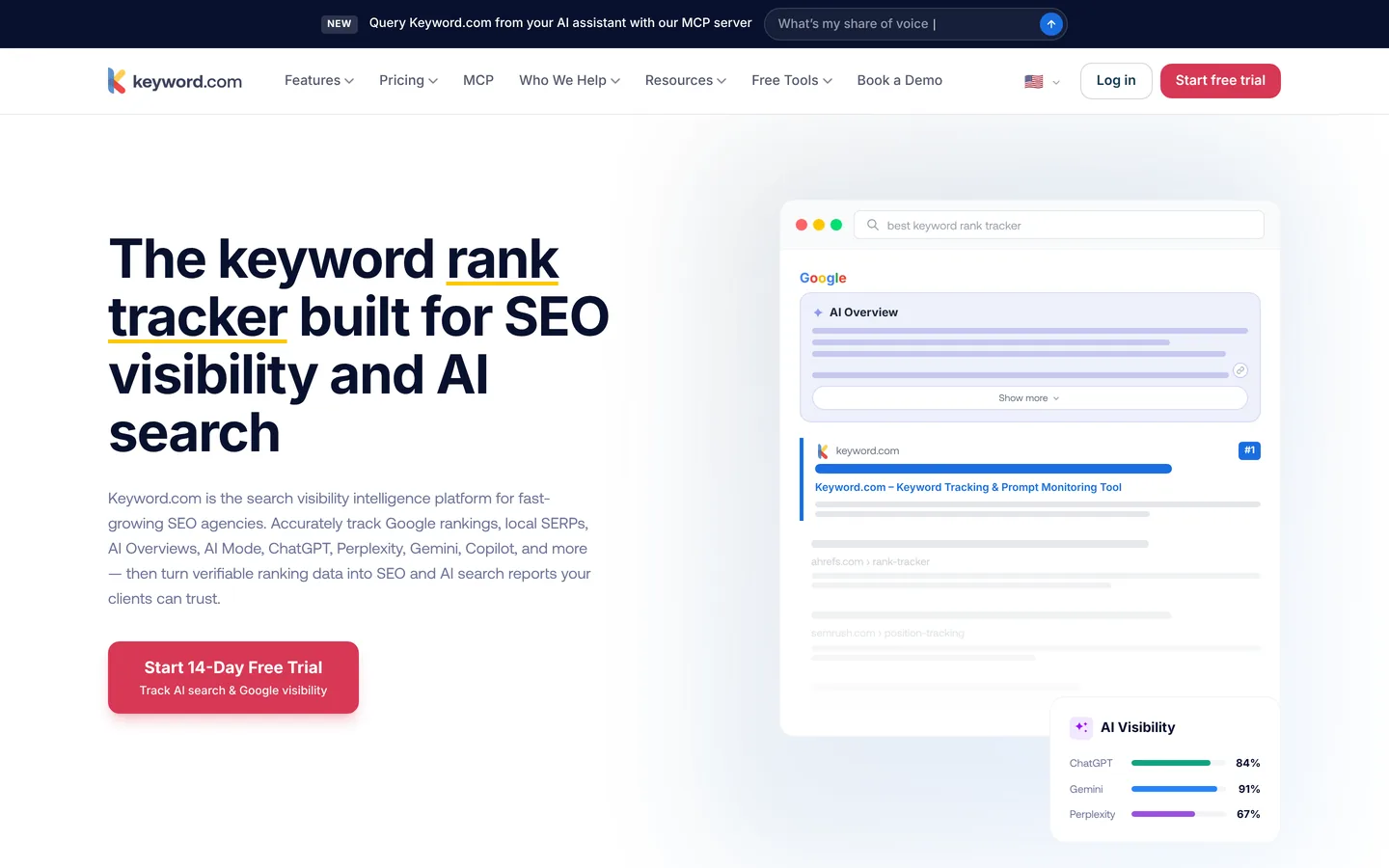
Keyword.com started as a Google rank tracker and now tracks AI answers on a long list of models. It is a good match for teams on a budget who want Google and AI rank tracking together.
Key features
- Models tracked: It tracks 5 chat apps (Google AI Overviews, AI Mode, ChatGPT, Gemini and Copilot) and 7 API models (Claude, OpenAI Search, Gemini API, Perplexity Sonar, Mistral, DeepSeek and Grok).
- AI Visibility plan: You can track AI answers on their own.
- 360° Visibility plan: You can track AI answers next to your Google rankings.
- Credits: A chat app run uses 0.25 credit, and an API model run uses 1 credit. Runs can be monthly, weekly or daily.
- Unlimited users: Every plan includes unlimited users and projects.
Pros
- The AI Visibility plan starts at $9.80 a month.
- It covers models such as Copilot, DeepSeek, Mistral and Grok.
- The 14 day trial needs no credit card.
Cons
- Both plans use credits, so check how far they go for your prompt list.
Price and plans
You can try Keyword.com free for 14 days with no credit card. Paid plans are as follows.
- AI Visibility: from $9.80 per month ($7.83 billed yearly) for 20 credits.
- 360° Visibility: from $33 per month ($26 billed yearly) for 1,000 keywords and 15 credits.
- Custom: from $490 per month.
 6. Otterly.ai
Otterly.ai reports whether your brand or your competitors get cited, with sentiment and domain and URL citations. Small teams starting out are its best fit, and it also audits your pages for AI search.

Key features
- Citation reports: You see whether your brand or your competitors get cited, with sentiment.
- Domain and URL citations: You see which domains and URLs the AI cites.
- Page audits: It audits your pages for AI search readiness.
- AI coverage: It tracks ChatGPT, Google AI Overviews, Perplexity and Copilot daily. Gemini, AI Mode and Claude cost extra.
- API, MCP and Looker Studio: Standard and up add an API, an MCP server and a Looker Studio connector.
Pros
- Lite costs $29 a month and covers 4 AIs.
- Every plan includes unlimited team members.
- A free trial lets you test it before you pay.
Cons
- Lite tracks 15 prompts, and extra prompts start on Standard.
- Gemini, AI Mode and Claude are priced separately.
- The API, MCP server and Looker Studio connector aren’t on Lite.
Price and plans
Otterly.ai has a free trial. Paid plans are as follows.
- Lite: $29 per month ($25 billed yearly) for 15 prompts on 4 AIs.
- Standard: $189 per month ($160 billed yearly) for 100 prompts.
- Premium: $489 per month ($422 billed yearly) for 400 prompts.
- Extra AIs: Gemini and Google AI Mode from $9 per month each, and Claude from $29 per month.
- Extra prompts: $99 per month for 100 more, on Standard and Premium.
 7. AthenaHQ
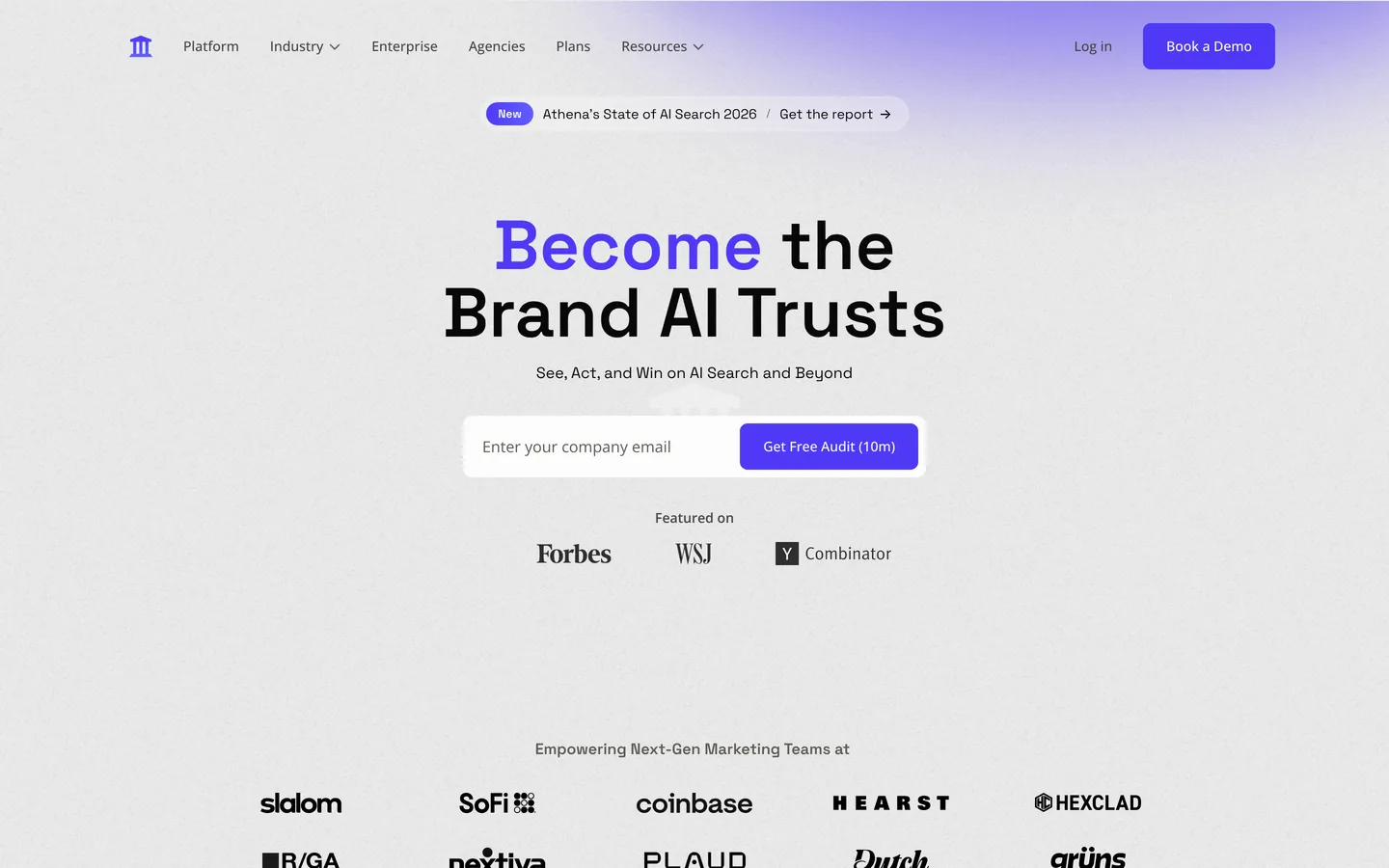
AthenaHQ is an AI visibility tracker that runs on credits, with a free plan and 11 models on its first paid plan. It suits funded brands that want credits across many AI models.
Key features
- Prompt tracking: It tracks mentions for each prompt.
- Competitor citations: It shows which competitors earn AI citations.
- Gap finding: It points out your gaps.
- Model coverage: Essential covers ChatGPT, Perplexity, AI Overviews, Gemini and Copilot. Starter covers 11 models, including AI Mode, Claude and Grok.
- Credits: It runs on credits, where 1 credit is 1 AI answer. Claude, Grok, DeepSeek, Meta AI and Mistral use 5 credits an answer.
Pros
- The Essential plan is free, with unlimited users.
- Starter lists 11 models, including Claude.
- Starter sets no limit on prompts, topics, competitors or seats.
Cons
- Starter costs $295 a month.
- Your cost grows with how many prompts and models you track.
Price and plans
You can start on the free plan (Essential) with 300 credits. Paid plans are as follows.
- Starter: $295 per month ($245 billed yearly) for 3,600 credits a month.
- Enterprise: custom.
 8. Rank Prompt

Rank Prompt tracks brand mentions across 7 AI assistants on every plan, with citation analysis and white label reports. Businesses with many locations or markets get the most from it.
Key features
- Seven AIs on every plan: It tracks ChatGPT, Claude, Gemini, Grok, Perplexity, Muse and Google AI Mode.
- Credits: One prompt on up to 3 AIs uses 1 credit, on 4 to 6 AIs 2 credits, and on all 7 AIs 3 credits.
- Location tracking: One prompt set can run for many cities or markets.
- Citation analysis: It analyzes the citations in AI answers.
- White label reports: Agency plans send reports under your own brand.
Pros
- Starter costs $49 a month for 150 credits.
- Every plan covers Claude and Grok.
- The free plan gives 10 credits once, enough for one full report, with no card.
- Extra credit packs never expire.
Cons
- Scans run weekly or monthly, with no daily option shown.
- Starter covers 1 brand, and Pro covers 10.
Price and plans
Rank Prompt has a free plan with no card. Paid plans have no free trial, and they are as follows.
- Starter: $49 per month ($39 billed yearly) for 150 credits and 1 brand.
- Pro: $89 per month ($71 billed yearly) for 500 credits, 10 brands and 2 seats.
- Agency: $149 per month ($119 billed yearly) for 1,000 credits, 50 brands and white label reports.
- Agency Plus: $299 per month ($239 billed yearly) for 2,000 credits, 500 brands and a white label app.
 9. Nightwatch
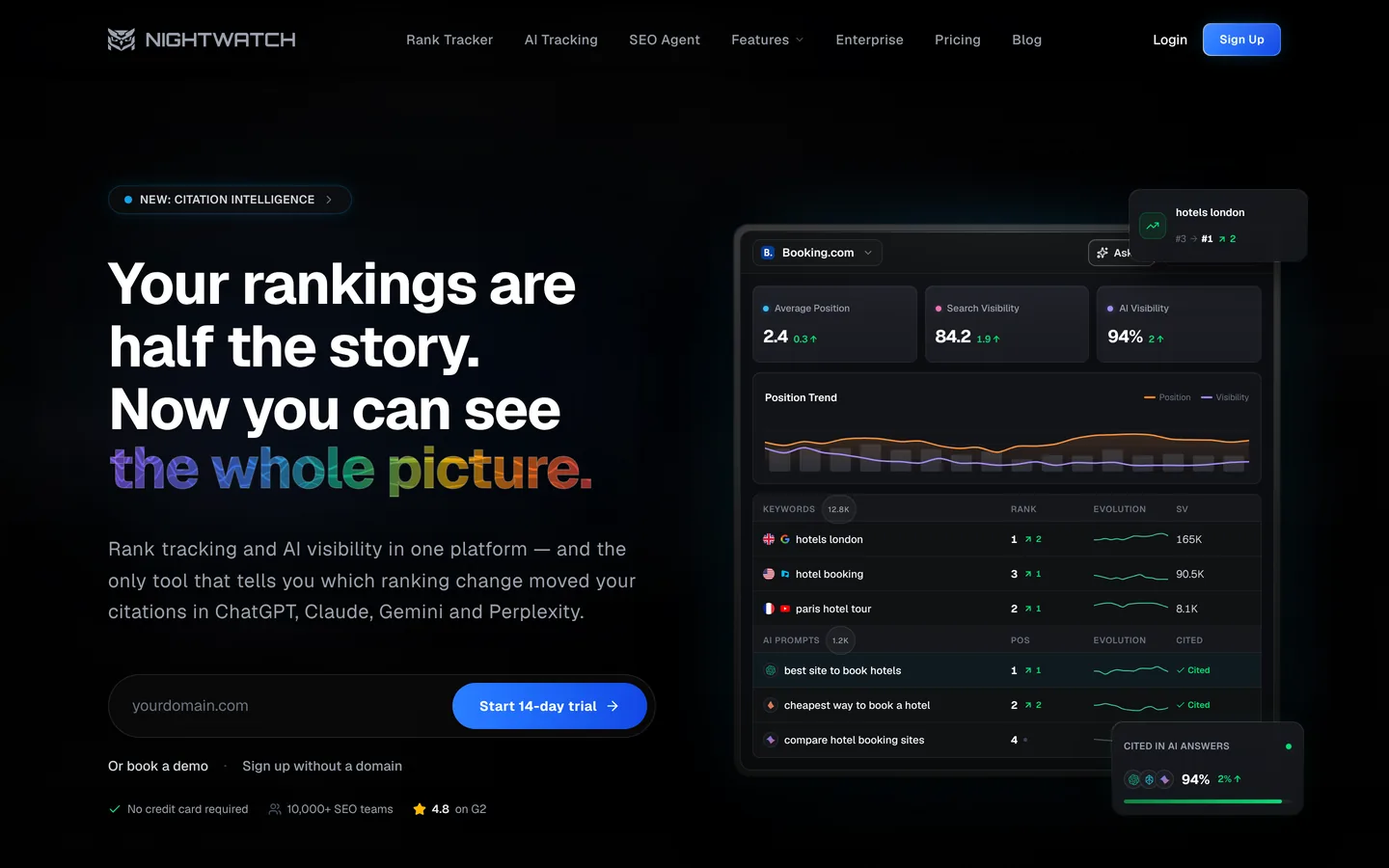
Nightwatch is a rank tracker for Google, Bing and YouTube that now tracks your brand’s citations in ChatGPT, Claude, Gemini, Perplexity, Google AI Mode and AI Overviews. It suits SEO teams with big keyword lists who want AI data on the side.
Key features
- AI citations: Every plan tracks your brand on ChatGPT, Claude, Gemini, Perplexity, Google AI Mode and AI Overviews.
- Search rankings: You see Google, Bing and YouTube rankings next to AI data.
- Reports and API: Professional and Agency add white label reports and API access.
- Unlimited seats: Every plan has unlimited seats with no seat fees.
Pros
- Starter tracks the same 6 AIs as the bigger plans, Claude included.
- Starter is €79 a month billed yearly.
- The 14 day trial needs no credit card.
Cons
- It’s built around keyword rankings, with AI data on the side.
- White label reports and API access start on Professional.
Price and plans
You can try Nightwatch free for 14 days with no credit card. Prices are in euros.
- Starter: €99 per month (€79 billed yearly) for 500 keywords and 50 AI prompts.
- Professional: €199 per month (€159 billed yearly) for 2,500 keywords and 150 prompts.
- Agency: €499 per month (€399 billed yearly) for 7,500 keywords and 500 prompts.
- Enterprise: custom.
 10. Rankscale
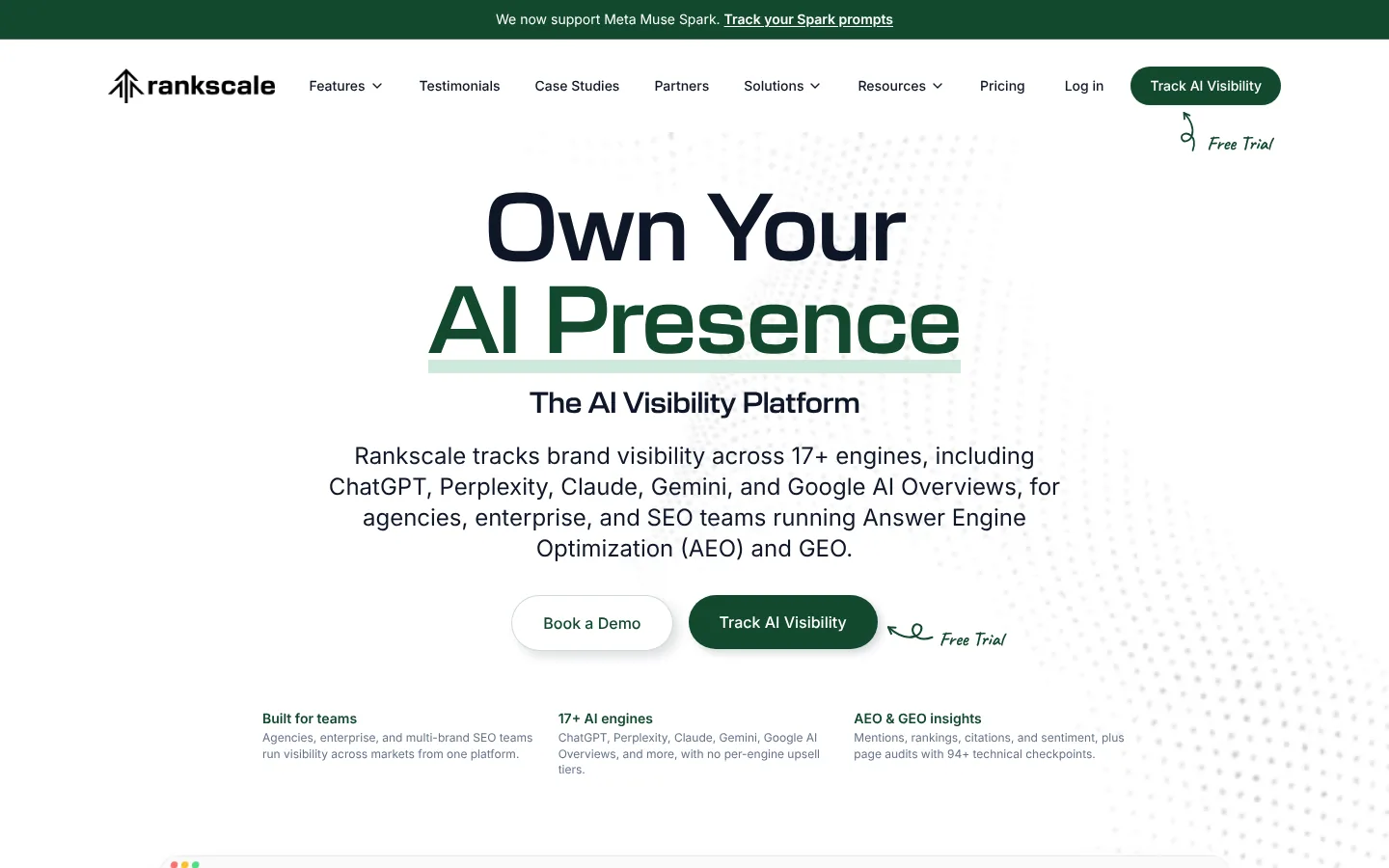
Rankscale is an AI visibility tracker that runs on credits and opens 17+ AIs on every plan. Teams who want many AI models on a small budget are the main audience.
Key features
- Many AIs on every plan: It covers ChatGPT, Google AI Mode, AI Overviews, Gemini, Perplexity, Claude, DeepSeek, Mistral, Grok, Copilot, Meta Muse Spark and more.
- Credits: A prompt typically uses 0.25 credit per AI. DeepSeek uses 1 credit and Claude uses 2.
- Dashboards and page audits: Every plan includes brand dashboards and page audits, from 2 dashboards and 10 audits on Essentials.
- Credit rollover: Unused credits roll over, up to 2x on Pro and Pro+ and 3x from Growth up.
- MCP and API: Pro adds an MCP server and Data Studio, and Pro+ adds a REST API.
Pros
- Essentials costs $17 a month, billed yearly.
- All 17+ AIs are open on each plan.
- Pro and up include unlimited seats.
- You can try Pro for free.
Cons
- Claude and DeepSeek use more credits per answer, so check how far your credits go.
- Essentials is billed yearly only, and it has no rollover, extra seats or API.
Price and plans
You can try Rankscale Pro for free. Paid plans are as follows.
- Essentials: $17 per month, billed yearly, for 120 credits.
- Pro: $99 per month ($84 billed yearly) for 1,200 credits.
- Pro+: $229 per month ($195 billed yearly) for 3,000 credits and a REST API.
- Growth: $385 per month ($327 billed yearly) for 5,500 credits and white label dashboards.
- Enterprise: $780 per month ($663 billed yearly) for 12,000 credits.
 11. Ahrefs Brand Radar

Ahrefs Brand Radar is the AI visibility tool from the SEO suite Ahrefs. It draws on a large index of prompts and answers that Ahrefs collects ahead of time, so data for a brand shows up right away. It suits teams who want AI data for their whole market before they build their own prompt list.
Key features
- AI Visibility Index: Separate indexes cover Google AI Overviews and AI Mode (one index), ChatGPT, Perplexity, Copilot and Gemini.
- Any brand: You can look up your own brand or a competitor with no setup.
- Custom prompts: Prompt packages track your own prompts on every index platform plus Claude, where a Claude update uses 8 checks.
- Checks in Ahrefs plans: Lite includes 150 custom prompt checks, Standard 300 and Advanced 600.
Pros
- The index is collected ahead of time, so you can see results right away.
- You can buy Brand Radar with no Ahrefs plan, and it comes with an Ahrefs Free account.
- The free AI Visibility Checker gives a first look.
Cons
- Each AI index costs $199 a month, or $699 for all of them.
- Ahrefs doesn’t have a free trial.
- The index holds a sample of answers, so track your main prompts with custom prompts.
Price and plans
Brand Radar is sold on its own, with no Ahrefs plan needed. Prices are as follows.
- AI Visibility Index: $199 per month per index, or $699 per month for all indexes.
- Custom prompts: $50 per month for 2,500 checks, $100 for 7,000 or $250 for 25,000.
- Ahrefs plans: Lite ($129), Standard ($249) and Advanced ($449) per month include 150, 300 or 600 custom prompt checks.
 12. Google Analytics 4 (free)
GA4 shows the people who click through to your site from AI assistants and what they do next.
Key features
- AI referral visits: It shows the people who clicked through from AI assistants.
- Traffic acquisition report: It lists visits by session source and medium, so you can search for sources like chatgpt.com.
- Landing pages: It shows which pages those visitors land on.
You can find these visits in 3 steps.
- Go to Reports → Acquisition → Traffic acquisition.
- Switch the dimension to Session source / medium.
- Search for sources like
chatgpt.com,perplexity.ai,gemini.google.comandcopilot.microsoft.com.
Then look at which pages those visitors land on. Those pages already appear in AI answers, so they point to the topics worth more of your effort.
Pros
- It’s free to use.
- You can see whether AI visitors go on to sign up or buy.
Cons
- It doesn’t show how often ChatGPT names you.
- You find AI sources yourself by searching the report.
Price and plans
Google Analytics 4 is free.
AI models covered by each AI visibility tool
Arrowsterr6Peec AI3How to get your brand recommended by AI
Tracking comes first. These are the steps we take once the data comes in.
How query fan-out shapes AI answers
When you ask an AI assistant a question, it often splits it into several smaller searches before it answers. This is called query fan-out. Ask “what’s the best CRM for a small agency?” and the model might also search for “CRM pricing for small teams,” “CRM with client portals” and “HubSpot alternatives.”
It then combines the most useful parts of each search into one answer, which is why pages with almost no Google traffic can still get cited. Ahrefs’ Ryan Law looked at the 1,000 pages ChatGPT cited most and found that 28.3% of them had zero organic traffic. If your page answers one of those smaller questions clearly, it can earn the citation.
Get mentioned on the sites AI assistants cite
Open the sources report in your tool and list the sites AI cites most for your topics. In most B2B categories, you’ll see the same mix: G2 and Capterra, a few Reddit threads, 2 or 3 “best tools” listicles and some brand sites.
Ask customers for reviews on G2 and Capterra, take part in the Reddit conversations and reach out to the authors of those listicles. A new mention on a source AI trusts can lift your visibility within weeks.
Write the pages buyers ask AI about
Look at the prompts where competitors get named and you don’t. They usually point to a handful of missing pages:
- “Best [category] for [audience]” pages
- “[Your brand] vs [competitor]” comparisons
- “[Competitor] alternatives” pages
- Clear pricing and feature pages that AI can quote
Write them with plain facts AI can quote, such as who the product is for, what it costs, what it does better and real numbers. AI quotes specific facts more often than general marketing copy.
Refresh pages ranking 4 to 20 on Google
Pages at positions 4 to 20 on Google are often the quickest to improve. AI assistants often search the web before they answer, so climbing a few spots there can also lift you in AI answers. Update those pages with fresh data, clearer headings and direct answers to the questions in your prompts.
Track your AI visibility after each change
Give every change 2 to 4 weeks, then check your visibility trend for that topic and do more of what works.
AI visibility tools FAQ
Is AI visibility the same as SEO?
They overlap a lot. Strong SEO pages often get cited by AI too. AI visibility also depends on what other sites say about you, and on how clearly your pages answer specific questions.
How many prompts should you track?
Start with 25 to 50 prompts spread across 5 or so topics. That is enough to see patterns while keeping the data easy to review. Add more once you know which topics matter most.
How often should you check?
Daily checks are best, because answers shift so often. Judge your progress on trends over 30 days, since single days vary a lot.
Which AI assistants matter most?
ChatGPT has the most users, so start there. If you get traffic from Google, Google AI Overviews and AI Mode matter just as much. Then add Perplexity, Gemini and Claude.
Summary: best AI visibility tools
Arrowsterr fits teams who want to track AI answers and fix the gaps in one place. SE Ranking and Nightwatch suit SEO teams who want AI data next to their rankings, and Profound is built for enterprise brands.
Pick a tool that fits your budget and the AIs your buyers use, then track your top prompts for 30 days. After that, the sources report shows you where to focus next.
To check where you stand today, run a free AI Snapshot and see what ChatGPT and Google’s AI say about your brand in about a minute.
The Arrowsterr team
We build Arrowsterr and spend our days helping brands show up in ChatGPT, Gemini, Perplexity and Google's AI answers. We sign up for every tool we review and check every price on the vendor's own site.

Surfer SEO vs Semrush: Content Tools, AI Tracking and Pricing (2026)
Surfer SEO vs Semrush in 2026: content editor, keyword research, backlinks, rank tracking, AI visibility tracking and prices, checked on each vendor's…

Mangools vs Semrush: Features, AI Tracking and Pricing Compared (2026)
Mangools vs Semrush: compare keyword research, backlinks, rank tracking, site audits, AI search tracking and list prices, checked on both vendors' own…

SE Ranking vs Semrush: Pricing and Features Compared (2026)
SE Ranking vs Semrush in 2026: plan prices, tracked keywords, keyword and backlink data, site audits and AI search tracking, checked on…